DesignX ESGSustainability And Embodied Carbon

Measure The Building's Carbon While It Can Still Change.

DesignX ESG reads material quantities from the Industry Foundation Classes (IFC) design model, estimates embodied carbon per element, floor and material, compares design options side by side and produces an ESG summary for the client and investors.

  • Quantities read from every element of the model
  • Carbon factors your team sets and can trace
  • Design options compared while the design can still move
The DesignX ESG Workspace

Carbon Against Target, At Every Design Stage.

Embodied carbon per square metre against the target, recycled content, timber share and the effect of each design option, from the same model the team designs in.

Carbon OverviewHarbour Tower · Version 4Option B · Stage 3
Carbon Vs Target412kgCO₂e/m²↘ 8.4% under target
Recycled Content34%↗ 5% vs Option A
Timber Share12%↗ 3% vs Option A
Design StageOption B Selected
TodayStage 3
ConceptMar 2026TenderFeb 2027
Embodied Carbon By Design StagekgCO₂e/m²
412kgCO₂e/m²↘ 23% since concept
Target 450
Concept538Concept
Scheme501Scheme
Option A503Option A
Option B412−18% against Option AOption B
Technical405Technical
Carbon Budget Used
92%Of Budget
Concrete62%
Steel21%
Glass And Timber13%
Why DesignX ESG

Four Advantages Over The Tools Teams Use Today.

01

Quantities From The Model, Not Re-Measured

Typical ToolsQuantities copied into spreadsheets by hand, out of date with the next revision.

DesignX ESGEvery quantity read from the element itself and updated with every new model version.

02

Early Enough To Change The Design

Typical ToolsAssessments run after the design is fixed, when only offsets and paperwork are left.

DesignX ESGCarbon measured from the first model, while the structure, facade and materials can still change.

03

Options Compared Like For Like

Typical ToolsEach option re-measured separately, so comparisons are rare and hard to trust.

DesignX ESGEvery option is a version of the project, compared on the same quantities and the same factors.

04

Every Figure Traceable

Typical ToolsA total in a report that nobody can trace back to the design.

DesignX ESGEach figure traced to its element, quantity and factor, and labelled as an estimate.

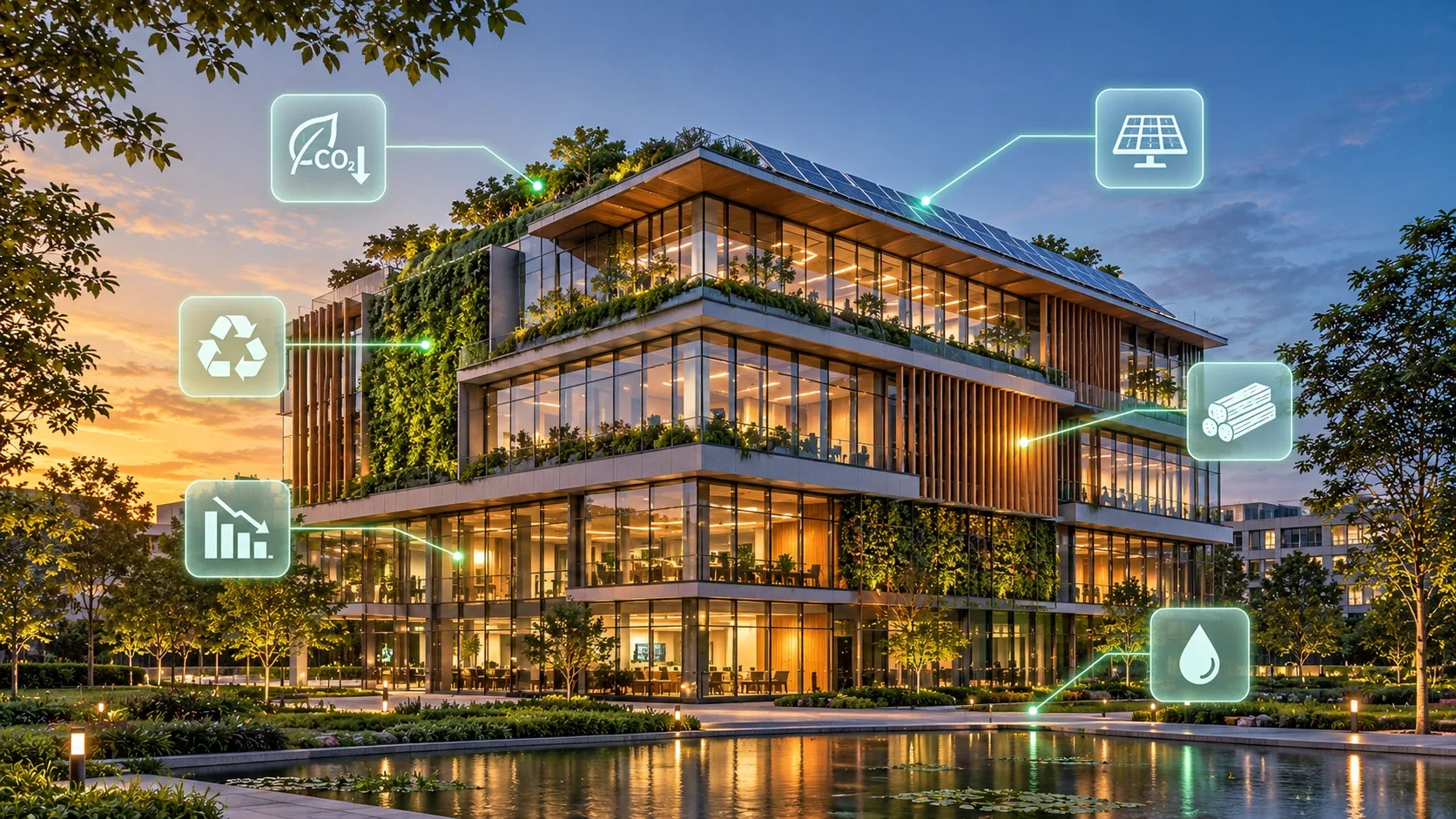
A timber and glass building with green terraces and solar panels at dusk, with carbon, recycling, material and water readings linked to it
Sustainability By Design

The Biggest Carbon Decisions Are Made Early.

By the time a building is finished, its materials are fixed. DesignX ESG measures the design model while the structure, the facade and the materials can still be changed, so the carbon figures can still influence the design.

Design TeamsSee which elements carry the most carbon and test lower-carbon options while the design is still open.
Clients And OwnersFollow carbon targets through every design stage, from the same model the team works in.
Investors And LendersReceive an ESG summary built from the model, with the factors and the version it came from.
Sustainability ConsultantsStart from the model's own quantities instead of measuring them again by hand.
Government AuthoritiesCheck a carbon or sustainability target against the model version that was actually submitted.
The Problem

What Gets In The Way Today.

Sustainability Is Measured Late

Assessments happen after the design is fixed, when the only choices left are offsets and paperwork.

Quantities Live In Spreadsheets

Material quantities are copied out of the model by hand, go out of date with the next revision and are hard to trace back to an element.

Options Are Hard To Compare

Comparing two structural or facade options takes days of re-measuring, so it is rarely done more than once.

How DesignX ESG Works

From Model Quantities To An ESG Summary.

1

Read Quantities

Volumes, areas, lengths and weights are read from each element in the IFC model.

2

Apply Factors

Each material carries a carbon factor your team sets, giving an estimate per element.

3

Find Hot Spots

Totals by element, floor, discipline and material show what carries the most carbon.

4

Compare Options

Each design option is a version of the project, compared side by side.

5

Share The Summary

A summary for the client and investors, built from the same model.

Inside DesignX ESG

What It Does, In Detail.

Carbon From The Model

Every Figure Traced To The Element It Came From.

Every IFC element already carries its material and its quantities. DesignX ESG reads them straight from the model and keeps them with the element, applies the carbon factor of its material, and adds them up by element, floor, discipline and material. A figure in a report can always be traced back to the slab, beam or curtain wall it came from.

  • Material quantities read from every element
  • Embodied carbon per element, floor, discipline and material
  • Carbon factors your team sets, recorded with each result
  • Updated whenever a new model version is imported
Embodied Carbon · From Model Quantities
ElementQuantitykgCO₂e
Slab L1–L7Concrete C32/401,840 m³512 t
ColumnsConcrete C40/50212 m³71 t
Transfer BeamsSteel S35596 t148 t
Curtain WallGlass + Aluminium3,120 m²96 t
Internal WallsTimber Frame2,410 m²18 t
Options And Versions

Test A Lower-Carbon Option While It Is Cheap To Change.

Import each option as a version of the project and compare totals and the elements that carry the most carbon. The team sees the effect of a changed structure, facade or material alongside the architectural effect, and the client sees the same numbers. Estimates are labelled as estimates, with the factors used.

  • Design options and revisions compared side by side
  • The few elements that carry the most carbon, first
  • Same quantities and factors, so the comparison is fair
Design Options · Embodied Carbon (tCO₂e)
Option A · Concrete FrameOption B · Hybrid Timber
Structure
Facade
Floors
Fit-Out
−18%Option B against Option A, from the same quantities and your factors.
Business Benefits

What DesignX ESG Does For The Business.

What changes for the organisation, beyond the hours saved, when DesignX ESG runs on every project.

A glass tower facade with rows of green glass fins against a pale sky
Early DesignCarbon While It Can Still ChangeEvery figure traced to its element and factor

Risk Mitigation

Carbon targets are checked against the design while it can change, instead of being found missed at the end.

Ecosystem Leverage

Uses the design model the team already makes: no separate carbon model to build or keep in step.

Investor-Ready Reporting

One summary for clients, investors, lenders and government authorities, from the same model and factors.

Carbon In Every Decision

Lower-carbon options are tested on the same model the design decisions come from, not in a separate study.

Questions

DesignX ESG, Explained.

What Is DesignX ESG?

DesignX ESG measures the sustainability of a building from its design model. It reads material quantities from the IFC model, estimates embodied carbon per element, floor, discipline and material, and summarises the result for the design team, the client and investors.

How Is Embodied Carbon Measured From A BIM Model?

Embodied carbon is the greenhouse gas released to make and install a building's materials. From the model, SpaceDesignX reads the quantity of each element, such as volume or area, and applies a carbon factor for its material. The result is an estimate that is only as good as the quantities in the model and the factors used.

Can We Compare The Carbon Of Design Options?

Yes. Import each option or revision as a version of the project, then compare the totals and the elements that carry the most carbon. Changes can be tested while the design can still move.

Which Carbon Factors Does DesignX ESG Use?

The factors your team sets for each material, from the database or environmental product declarations you work with. They are recorded with every result, so any figure can be traced to its element, its quantity and the factor used, and figures are always labelled as estimates.

What Does The Model Need For DesignX ESG?

Elements with their materials and quantities, which most IFC models already carry. Elements without a material or a quantity are listed, so the design team can complete them instead of the figure silently leaving them out.

Does DesignX ESG Replace A Full Life Cycle Assessment?

No. DesignX ESG estimates embodied carbon from the model early, while the design can still change, to guide decisions. Where a certified whole-life assessment is required, it gives that work the model's own quantities as a traceable starting point.

Can Government Authorities Use DesignX ESG?

Yes. Authorities that set embodied carbon or sustainability targets can receive the same model-based summary as the client, with the model version and the factors it came from, so a target can be checked against the design that was actually submitted.

Who Uses The ESG Results?

The design team uses them to choose lower-carbon options, the client to follow the targets, and investors to see a clear summary. The same figures are shared, so nobody works from a different spreadsheet.

All Questions

Put A Number On Your Design's Carbon This Month.

Send us a model and the targets you are working to. We will show you where its embodied carbon sits and which options move it most.